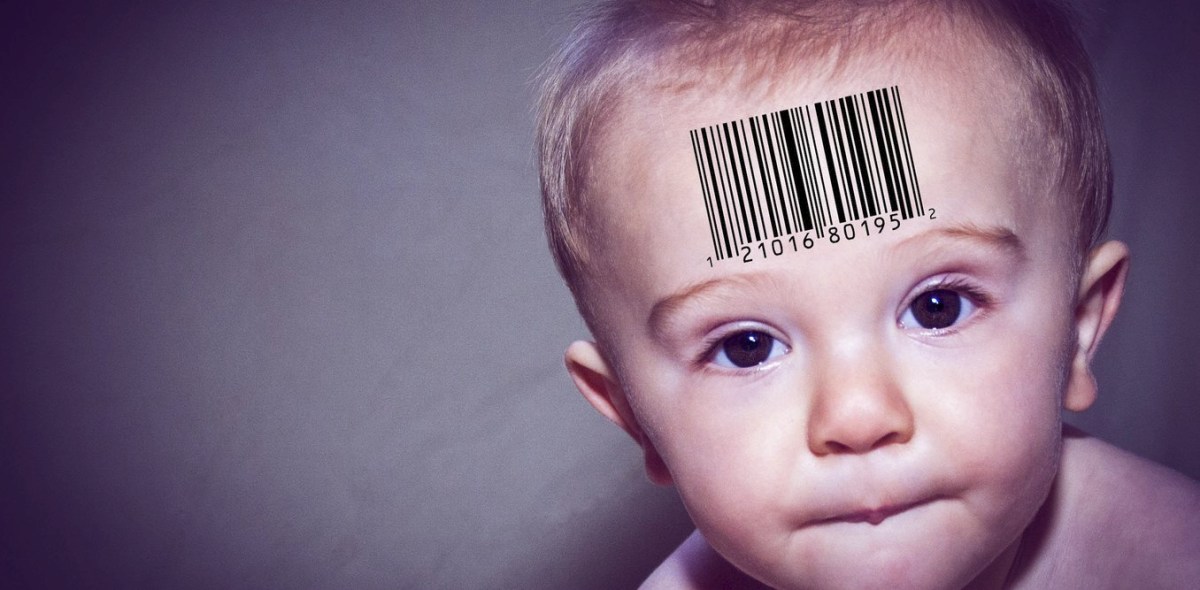
Tatiana Vdb/Manuel/Flickr, CC BY
I recently listened to a RadioLab podcast about a relatively new (2014) genetic engineering technology called CRISPR (Clustered regularly interspaced short palindromic repeats). It really opened my eyes to the scope of possibility and rapid rate at which we are looking to influence not only ourselves, but our relationship with every other living thing (even some extinct species!). So, what is CRISPR? To keep things brief and describe them through my surface level understanding, CRISPR is a DNA cutting technology. The idea was generated through the observation of bacteria’s defence mechanism to viruses. The bacteria produces two strands of short RNA (a molecule essential in gene expression), one of which contains a sequence that replicates that of the intruding virus. The two RNA strands then combine with a protein known as Cas9 which is an enzyme that happens to cut DNA. Upon entering the virus genome that has been paired with the mimicked RNA, Cas9 cuts away the virus DNA rendering it useless. This alone was amazing to see (follow this link for a great visual https://youtu.be/2pp17E4E-O8), but scientists soon realised they could use this technique to potentially isolate and remove diseases that devastate human populations.
One of the biggest killers in our global society is malaria, a parasitic borne disease carried by mosquitoes which according to the World Health Organisation killed an estimated 429, 000 people in 2015. 92% of these deaths were in Sub-Saharan Africa alone (this is a big focus area for the Bill & Melinda Gates Foundation). What brings new hope to this epidemic is something called “gene drive”. When we are created as humans we have a 50/50 chance of inheriting the genes present in either our mother or father. Not that genes may not be expressed by your parents but somewhere in their genetic history that expression was evident e.g your parents may both have brown hair but you could still be born with blonde hair if their parents/grandparents had blonde hair.
What a gene drive has the ability to do is weight this balance of genetic transfer so that it no longer is a 50/50 chance. Now, back to mosquitoes. A paper released by Hammond et. Al. (2015) demonstrated the ability to impart a CRISPR-Cas9 gene drive that targeted several genes that would make female mosquitoes sterile. The idea behind this would be to supress the population to a point where malaria transmission levels become unattainable for the species. These experiments were all laboratory based though and not on any “wild” populations. So what are some implications of CRISPR and what advancements are being made to minimise potential damages? The potential of eliminating an entire species from the earth poses obvious impacts on other surrounding species. We have seen the effects in the past with introduced species such as the cane toad. Therefore it is plausible that “playing god” could in fact destabilise an entire eco-system without any desired intention. Strategies that are being implemented to counter this are known as “daisy-chain” gene drives. The genetic weight that the particular “daisy-chain” gene drive possesses removes itself after only a few generations. In essence, you get a taste for what the overarching effect of that gene entails. This is where ethics comes into the picture.
We as humans may be defined and somewhat controlled by borders, but certain species are not and roam freely. So what if one country wanted to effect a species with its imposed gene drive but a neighbouring country opposed the idea? All of a sudden there are great deal of rules and regulations that require deep consideration. Then there is the notion of genetic warfare. It is definitely plausible that there is a future where genes could be altered to infect populations with devastating viruses. Whether that be through transmission from animals, parasites, food or liquids. A little dark I appreciate, but nevertheless when on the precipice of such fundamentally life altering technology we must understand that for all the positives there are undoubtedly countless numbers who desire to exploit such advancements. You could in theory create your own “perfect” person, child if you wish. I heard a scenario postulated on the RadioLab podcast I believe where they discussed the setting where a governing body could up-sell you on removing risks of certain ailments or adding certain characteristics to your child. Where does free-will lie there? Would you as a person be happy with the fact that your parents, adoptive parents perhaps “designed” certain characteristics you possess? What if certain government forces were able to enforce changes on certain populations to make super-humans or mutants? Quite futuristic ad far-fetched you say? A reality TV star is President of the USA!
Now, let’s bring all of this back into more fathomable realms and hypothesize where the actual good in this could come from. The obvious benefits of developing such technology is the preservation of human life. No doubt we want to increase the quality of living for future generations. That is the basic desire of evolution. But what is quality when there is so much quantity? I’m not a religious person, but is there not some power or universal law governing some type of ledger? That there is good and evil, positives and negatives, ups and downs. When we are looking at immediate problems that are trying to be resolved like the cure of disease, we create other issues like more mouths to feed, more jobs required, increased living space. When we take from somewhere something else takes back. The scientific revolution, the technological age, whatever you want to call the period we are evolving in currently is the greatest shift seen in humans in about 200 years. Its current influence on our interactions particularly as a global society is at times hard to fathom. I just hope that the genes that have driven us to do good in the world don’t become exploited by those who want to control it.
http://www.radiolab.org/story/update-crispr/
http://www.nature.com/news/gene-drives-thwarted-by-emergence-of-resistant-organisms-1.21397
https://www.nature.com/nbt/journal/v34/n1/full/nbt.3439.html
 Life as Benny