Featured

Welcome!

This is the post excerpt.

I’m not really sure as to what the point of writing this is. Or “what” this is. Maybe it’s the service of the fear of being forgotten, the ego shouting at my conscious mind to be heard and that it’s important. But does that mean the ego isn’t me? Is it using me as a muse for it to be heard? I almost sound mentally ill don’t I? But then, who am I? We all wear many different hats in order to achieve many different outcomes. Perhaps the ego encompasses all those hats we wear to speak on behalf of the entire group? Regardless, I have the urge to create some form of recording of my existence and how I interpret the world as I live in it.

WIN_20170411_14_30_39_Pro (2)

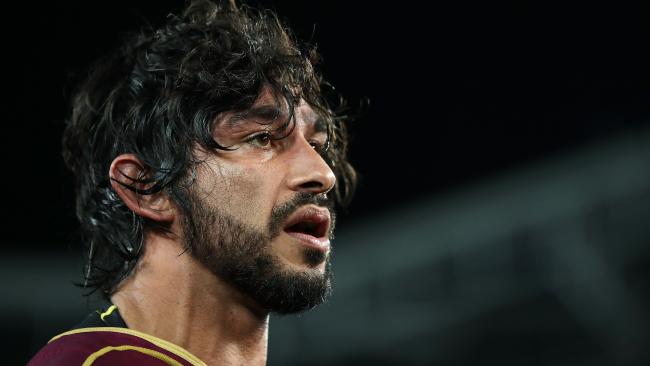
The insight I gained from the injury of a legend: Thurston

Expectation. Why do we constantly become disappointed with situations that fail to yield best possible results when we know it’s unrealistic to come to this conclusion? I originally wrote these first sentences with the notion that we emit disdain for undesirable outcomes when we should be grateful for the process and the ability to come out the other side and learn something. Through this I was attempting to position anger or frustration as useless and time consuming. Until one of my heroes, someone I attempt to emulate through my own vices Johnathan Thurston, has just fallen victim to a season ending shoulder injury. For those not educated on the man, he was absent from Game 1 of the State of Origin series due to the shoulder that now requires surgery, but got it to satisfactory function to allow him to return for Game 2 after Queensland’s humiliating defeat (28-4) to begin the series. Although it is arguable that Game 2 wasn’t Queensland’s best performance. It is undeniable to say that very few players on that team could have stepped up and kicked that goal to win the game from almost the same position that he missed, forcing the 2015 Grand Final into extra time. The emotion and exalted joy of the senior playing group was obvious once the full-time siren sounded. The scene was set, narrative script intact: Thurston would attempt to save Queensland from a series defeat in the final game of his origin career, in Queensland!

However, the big question that arose afterwards was the undeniable dysfunction Thurston experienced from his shoulder throughout the match. He squashed rumours of anything serious and was adamant “there was nothing structurally wrong” in post-match interrogations. Albeit as of about 12pm today a press conference was held with North Queensland coach Paul Green to confirm surgery was required and he would miss the remainder of the season for the Cowboys, Queensland and even the Kangaroos World Cup campaign. Circling back to my opening question: Why do we constantly become disappointed with situations that fail to yield best possible results when we know it’s unrealistic to come to this conclusion? I guess if I’m conversing with myself it’s because it doesn’t seem logical to bare emotions that would suggest we’re happy that we didn’t receive or achieve our desires. Our personal experiences are lathered in emotion which negates objectivity and embraces subjectivity. During such times a series of neurochemical reactions remove logic and tend to send us into selfish, individual minded states. Like “why me?” frames of thinking. Looking at this scenario I’m questioning why do I feel so affected? I’m clearly not alone in this reaction as social media is blowing up as I write this. I conclude it’s because of the perceived identity he carries on so many levels as a human, father, aboriginal, rugby league star, captain, leader, competitor, the list goes on. All of these discourses ascribe to a subjective view we have for Thurston, yet if we look at the objective view we can sour the situation into something quite nonchalant. He’s a professional sportsman, who comparatively earns far more than the average Australian. Despite what he’s set to miss in his playing career he will undoubtedly become an Immortal in the game of rugby league. He will receive the best medical treatment possible at no expense of his own. His shoulder will heal and thus be able to continue to live life full of quality after football.

Objectivity doesn’t pave the way for hugs and kisses and I for one am aware that I paint people who seek my advice and leadership as a friend, partner, client, whatever with this brush. Ironically, although it may seem as though I don’t care it’s the exact opposite! I believe you have every right to react with a subjective lense and elicit emotion. It shows you’re alive. But having the wherewithal to impose objectivity allows for a future sighted perspective that requires you to conjure delayed gratification. Practicing delayed gratification will steer you clear of the fast paced, dopamine dumping reality we find ourselves apart of in 2017. When shit isn’t going your way I think it’s healthy to get emotive and show a bit of fight. Because what you’re striving for resonates with you. But only when you can show pause and elect to take control through objectivity will you actualise the full extent of your situation.

What I would give to sit in a room with JT this second and let him unload all of the subjective emotions he’s going through right now. Rather than have to filter his selection of response through fear of potential media misconstrue. It must be hard for someone who lives on that social scale to not feel the weight of expectation by his presence. How could he not want to move heaven and earth, pull every string possible to leave his position in Game 3 unwavering? I can only deduce by his previous results that he utilises these scenarios in such a way that it benefits him and those round him. Moving forward, I’m sure there is another plot twist that requires an inflection for the finality of Thurston’s playing career and as an avid supporter of the Cowboys and rugby league of all levels I pray to the league gods that he rides into a more eclectic summation in comparison to Darren Lockyer’s final conversion attempt for Australia.

To parallel this to you, the reader. Allow yourself to feel the weight of your own expectations. That weight is the subjectivity you hold over this current outcome. But either ask yourself or someone you respect deeply for an objective view. It allows you to distance yourself from your emotions and attack the problem with new vigour. Engage, remove, recognise, re-engage, conquer.

P.S LLTK – Johnathan Thurston.

An Open Letter to Female Identity

As a coach over the years I’ve had many a conversation with females about their goals and desires. Whether that be composition, strength or performance. There always seems to be this conflict where everything needs to happen in conjunction with the other. There can’t be an isolated area of focus for long otherwise you’re not as good as someone else in another given area. Now, let me be clear. This blog isn’t about bagging out where women are going wrong or anything of that nature. I would actually love for this piece to start a conversation we you could help either share things that have worked for you or find some value in some points I put forward that could aid in your progress.

Needless to say the fitness industry has become an arena of fuckery and deceit that has created unrealistic perceptions of what it means to be fit and strong. Seeing some fitness models and the following they generate now on social media really concerns me as they can actually impart significant influence on large populations of impressionable girls. This part of the fitness industry gains momentum in my opinion due to where these populations generally train – in commercial facilities. Where do the majority of general pop. train? – the same place! So it’s a no-brainer to concede why the standards set by the fitness modelling industry are so easily adopted as “what I should look like”. A lot of people who aren’t educated in the sport also don’t realise that these athletes don’t work around week to week like they do on competition day. So to create the “I want to look like her” argument becomes even more of a fast. However to play devils advocate just to show some love for some of the female athletes i do know in the sport. The general pop. don’t realise how fucking hard it is to achieve some of those on-stage results. Discipline, education, consistency and “supps” (if you’re cheeky, wink wink).

But if I’m being completely honest the attribute a lot of these girls lack is strength. Unless you’re at a super elite level these girls simply aren’t strong. They’re lean and look half decent in a bikini but couldn’t will themselves through a set of deadlifts 1.5x their bodyweight for 10-20 reps if their Instagram likes depended on it. Instead you’ll have to endure a crash course in submaximal glute exercises that will get you the booty of your dreams (insert sarcasm). If we want to throw weight loss into the picture now the biggest mistake i see girls make is using WEIGHT loss as the only measure of progress in body composition instead of incorporating FAT loss. Most of the girls I know will hopefully already have implemented this. But if you haven’t I can guarantee you’ve had a meltdown over the scales! Which leads me to another area of the fitness industry I hate – group fitness chains. I don’t have to name names but you all the know the major player on every corner at the moment. My biggest gripe with this franchise is the cookie cutter approach they take training. If you possess any pathology that limits your ability to perform any movement, they don’t impose any regressions, they will simply change the entire exercise. So rather than giving you the light of day to I don’t…improve, they simply want to ensure you finish the session pissing out sweat and grab your insta selfie before you leave.

No doubt the training itself can generate quick results, especially if you’re trying to lose weight. If you’re okay with that weight also being muscle then you’re in luck! At the end of the 8-12 week training block the initial improvements you experienced will start to wash up, as with a number of training modalities. Where almost every other training modality will now take you is progressions. Attempting more complex movements or overload in new ways. Not these group training facilities though. Same shit, different day. They play on the quick-fix mentality our society currently possess. Everything is instantaneous and delayed gratification is low. I urge you to play the long game! It’s an old adage but still rings so true – anything good is worth waiting for. So please, do yourself a favour and don’t buy into a 8-12 week challenge if you have no plans on making a complete lifestyle change. Chances are you’ll blow out even worse than when you first started because you increased your calorie intake with training and failed to lower once you stopped.

The final place I’d like to touch on is finding an appropriate coach and community to train in. As observer, if you were to hear some of the conversations I have with my girls you may think I’m being harsh or overzealous. But what I ultimately try and bring to our conversations is passion and care. I’m not here to tell you it’s all gonna be okay and we don’t have to do this or that today. Your peers are there to lie to your face and bitch behind your back, not me. I’m honest and will always look to improve you not only in the gym but the standards you hold yourself too. I urge you to seek out coaches who do the same, who actually give a shit and go the extra mile. Next you need to find a place where even people who aren’t your coach give a shit. Year after year I’ve surrounded myself with coaches and other clients/members who are happy to wait around an extra 10, 20 even 30 minutes to help spot a client or “get a gate” for those who familiar with the powerlifting terminology. If you continue to immerse yourself in an environment in which you want to continually train in and those in it want you to succeed as much as you do you’ve found the right place!

So we’ve covered off on a few areas in this post:

  1. Don’t create a “I’ll never be as good as…” scenario for yourself. Have goals, but don’t look left & right of you every 5 seconds
  2. Stop setting your standards off what you see on social media
  3. Weight loss and fat loss aren’t the same thing. Just because the scales are down doesn’t always indicate you’re heading in the right direction long term
  4. Cookie-cutter group fitness franchises have a ceiling on the amount of progression/regression options they have for your training long-term
  5. Show delayed gratification
  6. Find a coach who cares
  7. Find a community who has your best interest at heart

If you take on board some of the things I’ve mentioned here you’re at a place where you can accept new long-term habits. Quit being influenced by flashy bullshit which is heavily market/advertisement driven. Once your money’s on the dotted line, care is gone. Find something that challenges you but you can see a path to still be improving 5, 10, 20 years down the track. It’s all out there. You’ve just to let go of the bullshit excuses you keep giving yourself.

Leadership – You’re a fraud.

I don’t need to sit here and educate you on the fact that leadership comes in many different forms. No doubt you can change the course of someone’s life without even meeting them, especially in the age of communicative collectiveness we share in 2017. However, it pains me to see people who want to be “influencers”. Scale these big ideas and alter your sphere forever. When we are encouraged to attempt these feats I notice the naivety you can sell yourself into. I myself have done the exact same thing. Balance is important, right? Wrong. What I’m beginning to understand is some people interpret balance as this fixed point, rather we are in the act of balancing. Balancing in this context is designed to describe living in a state of flux, constant motion. The notion that you’re going to reach a set of circumstances you enjoy and remain there is absurd. You already know this. So why do we strive for “balance”???

Balance is misconstrued in my opinion as security. You want to know that you can obtain a standard of living where you meet basic human needs (food, clothes and shelter) but have the flexibility to completely unwind and socialise (even though you can’t really afford it). Or you go to the opposite end of the scale and you don’t believe in balance. You’re a bit more of a risk taker. You invest heavily in one or two areas to receive what you perceive to be high rewards. This is where my take on leadership comes in. The latter population for all intents and purposes want to help whether that be by actions, services or a certain product they bring to the table. This can be used in a number of varying circumstances from sports, business, even parenthood. The falsity that gets created when people develop a community striving for a result is that of friendship or mateship. It’s a very interesting conflict that arises with leadership.

You can most definitely elicit care and compassion for people in general. You can also get a deeper understanding of someone’s circumstances that could explain certain behaviours or situational responses. But that doesn’t infer friendship. Where a lot of businesses or whatever label you wish to use go wrong is they start with this friendship based intent. They work hard to develop relationships during early stage development. But then it hits a tipping point. A point at which enough growth has occurred to encapsulate an added layer of social connection if you will. Meaning you set certain standards in place which allow you to instil discipline or create a gap that doesn’t allow a mutual sharing of information to occur. We’ve developed leaders who think vulnerability is weakness. Who think that taking advice from someone who’s come to them for advice isn’t a viable option. These types of leaders are the ones I worry about most. They are the ones who are surrounded by many but helped by few. This is not to say that they wouldn’t be helped, but what they’ve created is a picture where their energy is constantly being taken from them. They’re so caught up thinking they’re supporting and growing clients, customers, players, students etc. that there’s no one left around who they genuinely socialise with. I mean a conversation where you can be as engaged or disengaged as you like. The company of the person/people alone brings you happiness. Laughing over the latest gym fail videos or euphoric queensland meme (what a glorious page, check it out https://www.facebook.com/EuphoricQueenslanderMemes/). To make matters worse when you try to instil new standards with the foundational population, guess what? Yep, they now think you’re a dick and don’t care if you’re giving away gold bullions (okay maybe gold bullions that’s pretty fuckin’ legit) but I’m sure you’ve experienced something of the sort. An example I can give from my own experience is that of player and coach. You have your “originals” and you’ve got great rapport, a balance between fucking around but knowing when to put in work. Over time new players come through and cliques are created. They feel like they’ve got more pull and push the ledger in getting away with certain things or taking shortcuts without consequence. If this isn’t addressed appropriately you could lose respect and authority from the “old” players because “you’ve changed”. Or respect from the “new” players because you don’t fell inviting. Or both because they converge as a playing group in disrespecting you. A very fine balance if communication is poor!!!

This is not to say that leadership can’t fail under the guise of friendship/mateship. No doubt you tend to give a bit more slack to friends around certain standards especially when it comes to tough decisions, hence the term “mates rates”. Conversely, it would be remise to acknowledge that this weakness could be the hinging strength of great leadership. When honest, raw conversations are had which are designed to create progress for both parties, respect is going to be the long term result. Even if in the moment there is angst and tension. The people I respect most in my life are those who aren’t afraid to call me out on my bullshit not because they think they’re right. It’s because they care for me. Like all things in life we have this notion that everything should continue to grow and improve without regression but that never ever happens. It’s a fiction! Some of the biggest confrontations I’ve had have been with my mates. It’s designed to be constructive. If you’re attempting to grow something and you can’t handle regression through a constructive lense, I hope you enjoy being around for a short time with success.

The core message of this leadership bluster is if you generate legitimate relationships, mutual in their value you can expect a life that is fun as fuck because you got to live it for someone other than you, doing shit you’re passionate about. As will so many others…

CRISPR: The Darwinian Heist.

Tatiana Vdb/Manuel/Flickr, CC BY

I recently listened to a RadioLab podcast about a relatively new (2014) genetic engineering technology called CRISPR (Clustered regularly interspaced short palindromic repeats). It really opened my eyes to the scope of possibility and rapid rate at which we are looking to influence not only ourselves, but our relationship with every other living thing (even some extinct species!). So, what is CRISPR? To keep things brief and describe them through my surface level understanding, CRISPR is a DNA cutting technology. The idea was generated through the observation of bacteria’s defence mechanism to viruses. The bacteria produces two strands of short RNA (a molecule essential in gene expression), one of which contains a sequence that replicates that of the intruding virus. The two RNA strands then combine with a protein known as Cas9 which is an enzyme that happens to cut DNA. Upon entering the virus genome that has been paired with the mimicked RNA, Cas9 cuts away the virus DNA rendering it useless. This alone was amazing to see (follow this link for a great visual https://youtu.be/2pp17E4E-O8), but scientists soon realised they could use this technique to potentially isolate and remove diseases that devastate human populations.

One of the biggest killers in our global society is malaria, a parasitic borne disease carried by mosquitoes which according to the World Health Organisation killed an estimated 429, 000 people in 2015. 92% of these deaths were in Sub-Saharan Africa alone (this is a big focus area for the Bill & Melinda Gates Foundation). What brings new hope to this epidemic is something called “gene drive”. When we are created as humans we have a 50/50 chance of inheriting the genes present in either our mother or father. Not that genes may not be expressed by your parents but somewhere in their genetic history that expression was evident e.g your parents may both have brown hair but you could still be born with blonde hair if their parents/grandparents had blonde hair.

What a gene drive has the ability to do is weight this balance of genetic transfer so that it no longer is a 50/50 chance. Now, back to mosquitoes. A paper released by Hammond et. Al. (2015) demonstrated the ability to impart a CRISPR-Cas9 gene drive that targeted several genes that would make female mosquitoes sterile. The idea behind this would be to supress the population to a point where malaria transmission levels become unattainable for the species. These experiments were all laboratory based though and not on any “wild” populations. So what are some implications of CRISPR and what advancements are being made to minimise potential damages? The potential of eliminating an entire species from the earth poses obvious impacts on other surrounding species. We have seen the effects in the past with introduced species such as the cane toad. Therefore it is plausible that “playing god” could in fact destabilise an entire eco-system without any desired intention. Strategies that are being implemented to counter this are known as “daisy-chain” gene drives. The genetic weight that the particular “daisy-chain” gene drive possesses removes itself after only a few generations. In essence, you get a taste for what the overarching effect of that gene entails. This is where ethics comes into the picture.

We as humans may be defined and somewhat controlled by borders, but certain species are not and roam freely. So what if one country wanted to effect a species with its imposed gene drive but a neighbouring country opposed the idea? All of a sudden there are great deal of rules and regulations that require deep consideration. Then there is the notion of genetic warfare. It is definitely plausible that there is a future where genes could be altered to infect populations with devastating viruses. Whether that be through transmission from animals, parasites, food or liquids. A little dark I appreciate, but nevertheless when on the precipice of such fundamentally life altering technology we must understand that for all the positives there are undoubtedly countless numbers who desire to exploit such advancements. You could in theory create your own “perfect” person, child if you wish. I heard a scenario postulated on the RadioLab podcast I believe where they discussed the setting where a governing body could up-sell you on removing risks of certain ailments or adding certain characteristics to your child. Where does free-will lie there? Would you as a person be happy with the fact that your parents, adoptive parents perhaps “designed” certain characteristics you possess? What if certain government forces were able to enforce changes on certain populations to make super-humans or mutants? Quite futuristic ad far-fetched you say? A reality TV star is President of the USA!

Now, let’s bring all of this back into more fathomable realms and hypothesize where the actual good in this could come from. The obvious benefits of developing such technology is the preservation of human life. No doubt we want to increase the quality of living for future generations. That is the basic desire of evolution. But what is quality when there is so much quantity? I’m not a religious person, but is there not some power or universal law governing some type of ledger? That there is good and evil, positives and negatives, ups and downs. When we are looking at immediate problems that are trying to be resolved like the cure of disease, we create other issues like more mouths to feed, more jobs required, increased living space. When we take from somewhere something else takes back. The scientific revolution, the technological age, whatever you want to call the period we are evolving in currently is the greatest shift seen in humans in about 200 years. Its current influence on our interactions particularly as a global society is at times hard to fathom. I just hope that the genes that have driven us to do good in the world don’t become exploited by those who want to control it.

http://www.radiolab.org/story/update-crispr/

http://www.nature.com/news/gene-drives-thwarted-by-emergence-of-resistant-organisms-1.21397

https://www.nature.com/nbt/journal/v34/n1/full/nbt.3439.html

Significance – Why I walked away from my dream job.

After a lengthy series of shoulder dislocations resulting in two surgeries as well as a total ankle reconstruction by the age of 19, it became abundantly clear that walking away from the game of rugby league was my best option. I was in my final year of an Exercise Science degree (2012) and the opportunity to become a Strength & Conditioning Coach for the Redcliffe Dolphins Cyril Connell & Mal Meninga rep sides arose (U/16s & U/18s for those unsure). I thought it was a wonderful segue that presented some direction for a seemingly directionless degree and I very much wanted to stay involved in the game I loved so dearly.

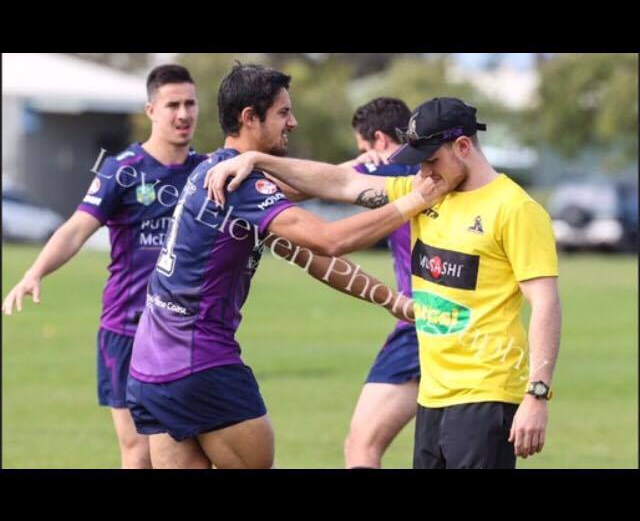
I experienced 2 grand finals that season, winning one and losing one before moving onto rival club Wynnum – Manly Seagulls Reserve Grade for 3 seasons. My time there yielded another 2 grand final appearances. You’re probably starting to think, wow this blokes tooting his own horn a bit. It’s the players who put in the hard yards to actually achieve these results. But being involved in this success was something I never really experienced as a player. I always played at a fairly mediocre level and was a big fish in a small pond. Being involved at a higher standard even as a coach, I started to build this identity of significance. My role became valued. Strength & Conditioning coaches didn’t even exist at a sub-elite level 5 years prior. Now it was mandatory to have one for every grade! I rode that wave on a social level too. All my mates were always keen to hear all the latest news and there was always a sense of envy that I was “doing what I love and got paid for it”.

All of this social feedback only reaffirmed that I wanted to make this a priority. That I would one day become an NRL Strength & Conditioning Coach. At the end of my 4th season as a coach, I was staring down the barrel of yet another season as a Reserves coach and after 2 grand finals I felt I deserved a promotion. But it didn’t seem likely so I put some feelers out and I got the opportunity to go back to Redcliffe. It ended up being the same role but after the first night of pre-season the Rehab Coach defected to Wynnum and I was offered the Rehab role (of the whole senior club). I took on the challenge and learnt a lot of new skills as well as standardised timelines of return to play protocols for various injuries. For the first time in just over 4 years I felt like I had true autonomy in my role and I was learning from someone who had experience in the role I wanted (Tony Guilfoyle was formerly at the Brisbane Broncos and since coming back to Redcliffe has now returned to the NRL with the Penrith Panthers). This was the increase in responsibility I was looking for and I now had much more contact with Queensland Cup level players. Again adding weight to the significance I felt with my coaching identity.

If being part of a staff for a team that went on to be Grand Finalists wasn’t enough, just 5 months after returning to Redcliffe I received a phone call from “Trigger” (Craig Ingebrigtsen) who was a development coach of mine as a kid who was now the Sunshine Coast Falcons Head Coach and Operations Manager for the Melbourne Storm NYC (U/20’s). He asked me what the terms of my contract were with Redcliffe and if I was interested in coming on as Strength & Conditioning Coach for the Storm side. You mean coach in an NRL system? One step away from my primary goal? I called Grant “Crusher” Cleal our Football Manager at Redcliffe and explained the opportunity. To his credit he was stoked for me and let me move on a weeks’ notice. Later that week I travelled up the coast (the Storm program had been relocated to the Sunshine Coast from Melbourne) for what I thought was just a meeting with the coach. But upon arrival I’m sitting with Trigger and he says “Mate, I think you’re a shoe in for the job, but we’ve got a few other blokes applying and Smithy (Eric Smith – Coach) just wants to tick a few boxes to be sure.” Keep in mind I’ve already quit Redcliffe and told them I got the job!!! It’s fair to say I’d never been shitting myself more than during that entire conversation with Smithy. Nevertheless, a few days later I was appointed at the Storm.

What got me pumped after taking on the Storm role was the sense of progression I’d gotten out of the narrative I was telling myself: you’re becoming a professional coach. Whilst I was still at Wynnum I remember having conversations via email with Lee Hopkins, Strength & Conditioning Coach at the Penrith Panthers. I was asking for some advice on progressing in the field. He was really responsive and some of the detail he gave about their protocols were extremely insightful. Yet I’ll never forget the fuel the following comment gave to my fire in becoming an NRL S&C coach. He said you’ve got to remember there’s only 16 clubs, depending on budget there’s room for 2-4 S&C staff. So take the averages and that‘s about 48 roles tops in the field you want to crack. That’s not easy! Well, the optimist in me thought “Fuck I hope everyone pushing for these roles is scared of those stats!” I wasn’t at all. In fact, my thinking went to the number of NRL players playing each year (approximately 400). So, that means it’s about 8x harder to become an S&C Coach than it is a player (statistically)! I’d never been more set in my ways after reading that email.

What changed? Well, I learnt a lot about myself at the Storm. I was finally in complete control of the prescription and implementation of an entire program. I could experiment with different protocols for certain positions, sizes etc. load management and recovery, it was great! But by seasons end I had a pretty powerful conversation with myself. I envisaged getting a call from Craig Bellamy, informing me I’d just been appointed Strength Coach at the Storm. I’d done it, I’d proved anyone who doubted me wrong. What now?…What now?…What do you mean what now? You’ve done it! But it was that response and the emptiness that came with it that made me realise I’d bullshitted myself. That the cool stories I got to tell my mates every 6 months when I finally got to see them outside of a packed schedule amounted to sweet f.a. That I felt I could provide something of greater depth rather than width. That the epidemic of suicide and depression evident in the rugby league community could be prevented. It was conversations I’d had with players over the years which planted seeds along the way to eventually reveal this elaborate web of ideas that I wanted to execute on. Notice the innocuous nature of the word conversation. Something so meaningless can hold such weight. It is this that I love most about rugby league circles. The conversation and how it can influence action. I won’t delve any deeper into what I’ve gravitated towards since leaving Rugby League S&C but something I said that resonated with a bloke now back in the NRL goes as follows. “I’d much rather see you succeed as a person than a footballer, any day of the week.”

Before finishing this blog I’m glad I stumbled upon this section of Yuval Noah Harari’s latest book “Homo Deus” and the notion of self and significance. He positions the two frames of identity that we operate through to evolve ourselves; the narrative-self and experiential-self. To use the example given in the book by Harari, look at how a soldier who lost his leg in battle would’ve reacted in the moment to that event. It’s absolutely horrific, the pain immense, and the uncertainty around death, crippling. This is the experiential-self, the real-time self. The narrative self is the now deformed soldier who is paraded around his home country being championed for protecting the security of his homeland. He now believes his sacrifice outweighs the pain and suffering encountered initially, a story, a narrative. When have you altered your actual experience to create a narrative that justifies your sacrifice? I’m positive we all have. It’s a coping mechanism to some extent. What I learnt about my narrative was that it didn’t really serve anyone else, or anyone long term. It was built to serve my ego, to say fuck you! Look at me! But at the core of my role as an S&C coach, it was my responsibility to help athletes physically. I still love doing that and continue to do so in my own business. But what drives me more is the psychology. How can you marry those two for all round human performance? Not athletic performance. More like..You-performance.

That in a nutshell is my current endeavour. One conversation at a time…

Success: Why you’re a piece of shit.

 Source: KENZO TRIBOUILLARD/Getty Images

The notion of success is something we are barraged with almost every day. What are you working towards to be successful? Define your own success! Do what you love and you’ll never work a day in your life! All of these questions and statements lead us to believe that success is subjective yet we put so many objective measures around what it means to be “successful”. Material things like money, cars, fancy houses, I don’t need to paint the picture for you, you know exactly what I’m talking about. Yet, why do we keep subjecting ourselves to these standards when we know it equates to the loss of so much more of the great intangible things in life? I’ve been fortunate enough to be surrounded by great mentors over the years and they provided me with a tonne of support and ability to be self-aware. This afforded me to gain more certainty and control over situations a lot of people would otherwise feel helpless and overwhelmed in. However, one thing I’ve noticed upon reflection and this ties in somewhat with a previous piece I wrote about “being busy” is that the noise created by this desire to “do” and be “successful” actually drives us away from what we’ve needed before modern civilisation; personal relationships.

Our ancient ancestors evolved in small bands of 20-50 and you knew each of them intimately. We live in Australia, the fourth most desolate land as far as humans per square mile is concerned and I still feel like there’s too many of us! I’ve made the observation that there is a difference between people who’re very skilled in the art of conversation and how that can advantage them in the business world but that doesn’t always correlate with having good social skills or social health. The uprise of any power whether it be a religion, government or business has been through the solidification of subjective views. Over time they become reaffirmed over and over again to create influence as a majority. By conforming, it easier to operate as an individual so you don’t have to be singled out as the oppressed minority (although we have seen a shift in the power of minorities recently, but I’ll leave that for another discussion).

In essence what I’m describing is how society has designed this reality to cater for large populations. Much larger than the former 20-50 bans sizes. By systemising almost every action we want to make, the powers that be have fabricated more and more barriers of entry. An example would be starting your own business. Idea to execution doesn’t happen instantaneously. It requires things like initial capital, bank loans, credit history, ABN’s, rights to business name, leasing land, purchasing relevant equipment the list goes on. As you wade deeper into each barrier you remove yourself further and further away of the actual “thing”, product or service you wanted to provide in the first place. You begin to suck at what makes all of this worth it; again, personal relationships.

I’ll give you a personal example now of a time where I realised the result I thought I was getting (more time & money) didn’t mean sharing it with those I wanted to. Like a lot of you reading this I’m sure you’ve been involved or known someone to be involved with an MLM (multi-level marketing/pyramid scheme) company. I became involved when I was about 19 and was invited by an older friend with a young family whom I worked with at the time. Investing my time going to seminars and listening to audios was something I translated to quite quickly. My strength and conditioning coaching required me to put in hours I wasn’t getting paid for and listening to uni lectures felt very similar. So if this was going to help me generate a “passive income”, great! I was moving up the ranks quite easily as I’ve never really found it that hard to talk to people and believed my mates have always found me to be authentic. I even got one of my best mates to join and one particular night we had an interesting realisation that lead to us both leaving the business immediately.

It was based off a conversation we were having with the guy who got me involved. He began telling us how you deal with criticism from friends about being in an MLM company. He said he realised he didn’t need those people in his life anymore. We quizzed him bemused, “You stopped talking to some of your friends because they hacked on you about being in MLM?” “Yes..” he replied. That was enough for us. As soon as my friend and I got in the car we knew we were never going to push a product (which face it, we didn’t give a fuck about) that would jeopardise any friendships we valued so much.

I believe you can draw comparisons to so many aspects of “success” in life. Do all the material things you own really matter if you’ve got no one to share them with? Or is it the idea of success that sounds more appealing because you have a preconception of what you think people will think of you? The title of this blog takes aim at those who lack empathy. Who carry weight in the ones and zeroes in their bank account. It’s amazing what you can leverage off something that doesn’t actually exist in this modern age. You can tie value to the potential an idea has and put any number next it. Justify it with a few growth indicators and it’s the next guy’s problem to execute with that risk. I understand the argument that the person purchasing the idea has a responsibility to analyse the risk. However, if we continue to acknowledge success in the form of ones and zeroes which is based on fiction, deceit and loopholes it’s a safe bet those people won’t have many friends (hence…you’re a piece of shit.)

We know of the numerous studies done around income and happiness. So it perplexes me when I encounter these people who are deemed successful but just can’t stop in the business world. This constant want for more. The question I have for these people is who are your friends? Do you have any? I don’t mean you know their name and what they do for a job. I mean could have a meal with them. Entertain their family. Watch you favourite sport with them. I have confidence that a great measure for success would be who comes running to help you in times of need? For a lot of “successful” people I think they’d be in company with a pack of stray dogs…

The Meaning of Life: Why death may be our only option.

“To live is to suffer, to survive is to find meaning in the suffering. If there is a purpose in life at all, there must be a purpose in suffering and dying. But no man can tell another what this purpose is. Each must find out for himself, and must accept the responsibility that his answer prescribes.” This is an excerpt from the preface by Gordon W. Allport in Victor E. Frankl’s “Man’s Search for Meaning”, a brief account of one man’s experience inside a German concentration camp published in 1946 (Frankl was a Professor of Neurology and Psychiatry).

Reading of the experiences of a person who was involved in arguably one of man’s worst acts of cruelty on its own kind left me feeling nothing short of overwhelmingly grateful for my current circumstances. The recollection itself only lasts 100 pages but it cleverly recounts his treatment by dividing a prisoner’s behaviour into 3 stages: (1) Shock upon being exposed to such conditions as were seen in those camps. (2) Apathy as a result of acclimation to their mistreatment. (3) Reactions of depersonalisation e.g. the realisation that family members have died, survivors guilt, a sense of entitlement due to mistreatment etc. He parallels the aforementioned with his own anecdote for survival which was purpose. Frankl describes conversations he had with fellow prisoners about eliciting pride in suffering, that if they were subject to this abuse they may as well get good at it! To even comprehend taking this viewpoint in such conditions is hard to fathom. But to replicate the core message and apply it to western society’s comparably trivial problems fills me with a sense of confidence. Mainly because I’m left clutching at straws when I try to produce an excuse as to why I can’t achieve what I want in life or experience my version of success. Notice I said “my” version of success. Far be it for me to tell you the reader what should or shouldn’t define success. The answer lies in the deeper levels of questioning you have with yourself. Ultimately, you will know at some point if you were bullshitting yourself all along.

I often hear people say when discussing what they want out of life or simply what they’re working towards, the response is “balance”. Paraphrasing Frankl on this subject, he echoes the notion that to consider equilibrium or homeostasis a marker of mental well-being is dangerous. That in fact to strive & struggle as opposed to living in a tensionless state is what promotes growth and contribution. Unfortunately the technological age that we are all apart of has created somewhat of a paradox. We live in a society that continues to improve on convenience and effortlessness. Instead of being weighed down by a lack of meaning, our frustration has been harboured due to lack of pleasure. The 19th century, Polish philosopher Arthur Schopenhauer puts it perfectly “that mankind was doomed to vacillate eternally between the two extremes of distress and boredom.” Let that sink in for a moment. Who would’ve thought something pondered centuries ago would ring truer today!

Observe the stress and general disdain you had when you were at school. How you couldn’t wait to be on Christmas holidays and to not have to listen to teachers telling you what to do all the time. But after about 3 weeks you’d run out of exciting things to do. You no longer found pleasure or excitement as you did in those initial weeks. The same occurs on a micro level for your typical 9-5 workers. How many unproductive, boring Sunday arvos have you had? All the stress of work leaves you thinking that nothing is the perfect something. Intuition tells me that’s not what you’d have hoped you’d done in retrospect on your death bed? Which brings me to the fork in the road in this sense of meaning in life and why do we need a why. This attitude is only harboured at a point in time where we don’t believe death is imminent, but we also understand our existence is finite. But what if that changed?

Due to the advancements in health sciences and ability to reduce child mortality rates (4.1 in every 1000 live births in Australia as of 2014 research by the U.S Department of Human Services) the number of us living well into adulthood has skyrocketed. With the focus now more on preventing disease that will likely cause death later in life, are we on the verge of becoming a-mortal? This is the understanding that dying from natural causes would no longer be an issue, however you could still be murdered or die in a car accident etc. This undoubtedly opens up a number of moral, social and economic issues to name a few. Nonetheless I want to keep this subject on the vein of purpose and meaning. How do you think you would live your life if you knew the only way you would cease to exist was either in an accident, murder or suicide? It’s a crazy concept to fathom but is potentially only a few generations away! The optimist in me encourages the thought of growing with numerous generations of grandchildren and great-grandchildren etc. The bonds of influence that could be created on my own bloodline. Not to mention the desire of travel and exploration. Being able to strategically plan when and where you want to go and experiencing so much change in those same locations over a vast expanse of time currently unbeknown to us. The realist in me says that I would tire of such novel ideas and the weight of a theoretical forever would bring with it no sense of urgency to achieve. I believe what drives most of us who love to achieve is that we realise this can’t last forever. When we are young we don’t ever think at the time we’ll be the old bastard bellowing “back in my day” but in reality it’s an appropriate course. With every affordance our generation is granted, we build on the ideas of those past with the expectation that future generations will do the same with their opportunities.

With the pettiness that exists in modern society around what matters like gender pronouns, sugar is the devil and the US election becoming the greatest popularity contest on earth I am wary of a future where the only means to an end due to such an amazing advance in human technology may mean the most common form of death is something I’m trying so desperately to prevent in my field…suicide.


How I thought being “busy” was getting me where I wanted.

The urge to just “do”. Is it something you experience often? I’m sitting in bed wondering why my circadian rhythm isn’t complying and I feel compelled to write something down. To be busy. This is where a fork in the road appears for the majority of people. The notion of productivity vs. being busy. I’ve had the realisation that the term busy is a word used in conversation almost every day to describe how much pointless shit we managed to contrive in our lives. But at what cost does that busy-ness have on your ability to actually create anything to be proud of? We live in this deceiving paradox of time where we know that our lives are finite, but have an expectation of how far away that is. That distance we create lacks urgency, so we have developed a tendency to fill it predominantly with “stuff”. Activities that lack any real substance that we feel will influence, inspire, revolutionise, whatever term you wish to place around it. Why? Because we have lost our creativity as a culture. We are spoon fed an a + b = c equation to derive what is accepted to be appropriately attainable.These equations differ slightly from variances in the cultural discourses all across the Western World. However for me personally, I’d have to say my creativity took a sharp dive when I began university. It was an environment in which “facts” (the most recently accepted data) was placed in front of me, I needed to recite my understanding of that data and at the end of 3 years they would tell me if I was adequate enough to receive my piece of paper to become an over qualified personal trainer (insert crying with laughter emoji….and a $20k HECS debt). This also coincided with the end of my football playing days, a great source of identity in my life. An explanation has now become apparent as to why I feel like there’s such distance from the age of 18 to 23. I wasn’t being productive through creativity. I was simply busy.

Most of my friends will attest to the fact that I’ve always been a hard worker who does my best to fill my plate and stay moving. One who isn’t seen all that often, but for good reason, I’ve got my head down and arse up. But what did I actually achieve? Yes, I earned a degree and began my career in strength & conditioning but aside from that I contributed nothing. This is another area that I find vital to creativity. When you’re demonstrating contribution, there is a predetermined notion that you’re looking to service a need outside of your own benefit. When you’re a uni student, working in retail, with a convenient girlfriend and a social group you no longer partake in the same sport as, you become a bit of a self- centred arsehole. Not necessarily by choice, I suppose more as a product of circumstance. My first big hit of dopamine from contribution I can recall in this reflection would be helping my first client lose 20kg. To some degree creativity was met as I designed the program to achieve her result. Nevertheless, when you repeat the same process you acquire a tolerance. So to achieve a new sense of worth you must contribute to something greater. That’s where I’m at right now.

The next addition to productivity, creativity and contribution is scale. How do I fulfil those needs by doing so for as many people as possible? As a strength & conditioning coach I felt my scope was just too small on an annual basis with respect to number of athletes I have contact with. Furthermore, I don’t want to just influence rugby league players to achieve what it is they want as a PERSON not just a player. I want to talk to people in this format you’re taking part in right now. If I don’t know you personally I’m beginning to weave my way into the footholds of contribution I wish to have (and if I do know you please share this with someone I don’t!). That my views on the way the world works may challenge your thinking, to create pause to reflect on the lives we lead and most importantly, to ask questions!

I hope we could get to a point in society when someone asks, “Hey! What’s been happening?” More of us can say “I’ve just been really productive.” As opposed to “Not much.” Or “I’ve just been really busy..” Fingers crossed it’s also shed some light onto your own circumstances and perhaps areas where you have become too accepting of what’s expected of you. Don’t ever think that it’s too late to do something you want to do. I don’t mean that in some motivational speaker bullshit way either. If you have a passion and can convey insight, you can make a living out of it. I hope you’re never busy again. Stay creative. Stay productive.

What I learnt about time, money and the purpose of my existence.

I’ve woken today and postulated the concept of purpose; what should I be doing? What is a waste of time? Again I think it comes back to beliefs and how you perceive the information you take in as well as the application of this new knowledge. I’ve begun to understand recently that you can know something but can’t truly acquire the learning until you’ve experienced it fully. For me personally I’ve experienced my own circumstances with life’s current two powerhouse commodities – time & money.  I invested a great deal of time to earn a great deal of money (comparative to the coaching service I provided) but couldn’t spend the time with my partner, friends etc to the capacity I wanted. Then through a restructure of the time for money concept, I earnt more money in a given time (giving me more time) but the frequency dropped as the quality of service diluted which in due course left me with less money. Now I’m left in a position where I have flexibility to “do what I want” but almost to a point where I’ve got so much time that I’m not doing what I want! This is something you often here described with money. A Princeton study in 2010 informed us that happiness did not increase further from an annual income of US$75000 (almost AU$100,000 as of 2017). I would tend to agree as this was the threshold I was beginning to reach and as a mentor of mine Tim Bishop once said “more money simply helps you arrive at bigger problems with style.” Again this rung true. I wasn’t concerned with bills, food and fuel costs, buying new clothes, equipment for my business, presents for festivities etc. However, now I’m operating at about half of this but my psyche hasn’t really recalibrated to an impoverished state of consciousness.

I’m not entirely sure why that is. I just “feel” like everything is happening for a reason. Yet I don’t know what my belief system could be categorised into. Should it be? We as a species have an inherent need to categorise and label things simply so we can take a position. The ego needs to be heard. The abundance of time now have due to leaving part of my old profession in rugby league strength and conditioning, in an attempt to design a mentoring and training business for player growth has left me exploring an assortment or new interests.

It’s allowed me to internalise that what I enjoy most about anything I do is the contact with other people. The fact that I can support someone else’s desire to improve themselves physically, mentally and emotionally gives me significance. Not to mention the variety that we each hold as individuals and collective groups of society. Therefore I’m truly excited about what it is I’ll be doing 5, 10, 50 years from now! As long as there are people I will always feel the need to help them in any capacity. This is where the fear of poverty stops with me I suppose. As long as I can provide value to someone I will always have “enough”. What enough is I don’t think is ever really quantifiable, nor will I actually know or probably feel like I have enough. It won’t be until I pull myself out of the present to reflect that I’ll have the ability to exercise gratitude and perspective on the situation.

So to you, the reader. When postulating your own purpose, I encourage you to exhibit delayed gratification. It’s something I know a lot of people struggle to implement in so many lenses of their life. Yes, it’s partly due to the instantaneous rapid-fire society we’ve established. However, could it be that you want something that requires the one commodity you don’t want to waste?…TIME. I’ve noticed an irony with how we as humans experience time. Firstly, picture an activity you really enjoy. Now recall whether that time went really quick or really slow. Counter that with a memory of an activity you don’t enjoy. Again, did time go slow, or fast? My guess is the activity you enjoyed went fast and vice versa. Speculation around this dilation of time has something to do with the frequency that we operate when we are enjoying something versus when we don’t enjoy something. Generally when you are enjoying something you’re learning via engagement through conversation or perhaps executing a flair of creativity, whatever that looks like to you. This would indicate to me that happiness is something you notice upon reflection, rather than feel in the moment. That the more you focus on utilising time now the more you steer away from the enjoyment you get around fulfilling a purpose which reflects time in the future. I can’t stress about trying to build a model that will channel the most growth (in a financial sense) in order to help the overall well-being of rugby league players. Otherwise I’ll gravitate towards perfection of that structure as opposed to just engaging with players because that’s what I love. Your creativity around the aspects of life you enjoy is how you restructure your path in order to stay present.

In summary, purpose is your why. That why should make you feel every emotion you thought you could ever experience and regardless, you’ll show up and deliver. At the risk of coming across a little Zen. Stop trying so hard to confine and label. Instead just do and be. That “do” and “be”, action and identity will change. If it doesn’t, you’re fucked. Now, go forth and conquer…


The “Athlete Vacuum”: A struggle with identity.

Am I a body? Is that the definition of my identity? Am I a linkage of memories to my last known previous self or selves? Therefore creating this long chain or perceptually linked events. I heard something quite profound today (1st of March 2017) from former UFC Bantamweight world champion Dominick Cruz. He unfortunately underwent […]

Am I a body? Is that the definition of my identity? Am I a linkage of memories to my last known previous self or selves? Therefore creating this long chain or perceptually linked events. I heard something quite profound today (1st of March 2017) from former UFC Bantamweight world champion Dominick Cruz. He unfortunately underwent 3 ACL reconstructions which took away essentially 2 years of his professional career, all after becoming world champion. What he said was the biggest difference enduring his 3rd reconstruction was the time spent growing out of “a” identity, at which point he thought “is” his identity. As soon as he let go of that and stopped trying to argue the point with himself, he was able to adopt processes much more and know how he could impact outside of who he “thought” he was. The sense of identity ultimately just ties back into personal beliefs. Change your beliefs, values, standards, habits….change you? The moment you let go of who you think you are is the moment at which you can overcome anything. I’m not talking about becoming some millionaire magnate overnight with this process. I’m talking about letting go of the notion that you are in total control. That some things are out of your hands. However, you’ll be acutely aware of the thoughts you begin to have. What triggers cascade into the resulting identity required to get you the result you desire. There is a model constructed by Steven Kotler, author of “Rise of Superman” based on the scientific evidence of flow amongst extreme sport athletes and the influence it’s having on fortune 500 companies and international military training alike. It describes 4 components of flow.

  1. Struggle
  2. Release
  3. Flow (itself)
  4. Recovery

What I’ve noticed in applying this model to rugby league players in my sphere, is that the above cycle occurs on micro AND macro scales. To say that a professional footballer hasn’t experienced flow at some point during their career would be absurd. The struggle in defending your teams line before getting a reprieve with the ball (release) before travelling the length of the field to score (flow) is something that happens quire regularly in league (the recovery would be whilst the shot at goal is being taken). This scenario ticks all of those boxes on a certain scale. But what I notice is that there may be cause to believe in multiple flow cycles occurring simultaneously (ie. Micro and macro scales). The above example is that of group flow. So an individual is experiencing an individual state of flow from a group flow cycle. If the individual isn’t recovering effectively from that group flow experience, they can get trapped between recovery and struggle because so many athletes won’t release one thing…IDENTITY. I believe that the next stage of elite athletic execution will come through the athlete releasing the sense that they are an athlete at all. What are you learning within that craft that is applicable to any other identity you choose to adopt? The ultimate magician is that whom can wear the most hats. The real fight for an aspiring athlete or aspiring anyone isn’t about the struggle to achieve what you want to achieve. It’s the struggle of knowing what to achieve next!

That struggle for “next” may well lie in the lack of big picture thinking and the naivety of being too present with the current identity (in this case a professional athlete). They are happy to act without a care for consequence. They have subjected themselves to a cultural bubble in which social norms are skewed. If more athletes could strip themselves back to who the fuck they really are without their guise, some truly amazing things would be achieved not only as an athlete, but as a human. Which leads me to practice what I preach. Who the fuck am I? I’ve gone through a massive identity shift recently and let go of what I thought was a dream of mine. That was, becoming an NRL Strength & Conditioning Coach. I’d developed this sharp reactive confidence that enabled me to truly believe it wasn’t even a matter of how it was when. All of my colleagues who’d mentored me had reached the professional stage and once becoming the Melbourne Storm NYC S&C Coach I knew it was the final step before my dreams became reality. But then it all hit me in the face…more on that later. But for now, who do I think I really am? I’m someone who definitely cares about what those close to me, think of me. I try to make that as positive as I can for me, by giving. I know that as long as I can put someone else’s well-being above my own, then I’ll be okay. Over the course of time I’ll be justly rewarded. I’m emotional, in the sense that I project my mood onto those around me, sometimes positively, sometimes negatively. With that ability though, I derive leadership. I can alter people’s state through my language. This is how I love to give. Posing questions people won’t ask themselves. Challenging them to grow and not settle for comfort. That there is purpose in struggle. 90% of the time, the advice I have for someone is my subconscious mind raising a point to my conscious mind about changes or things I need to address. Like my previous statement “there is purpose in struggle”. It has dawned on me at this very moment that I’m, going through a struggle. On more of a macro scale, not “I’m just having a shitty day”. That my ego got the better of me. I’m not as witty as I thought. Things weren’t just going to grow themselves. That I need to fight and will no doubt have to again. But it’s about being able to recognise the process so you can move through the cycles of flow more readily.

I highly recommend adhering to your own version of thought splashing as I’m doing here. There’s something cathartic about conversing with an audience that is really yourself. Seeing the nooks and crannies that have been left untouched, waiting to douse you with your own insight that you were longing to hear from someone you expected to be far more worthy than yourself.